
How Globalization Changed The Free Market
The Heritage Foundation, arguably the Conservative think tank with the most clout, is changing the definition of free market.

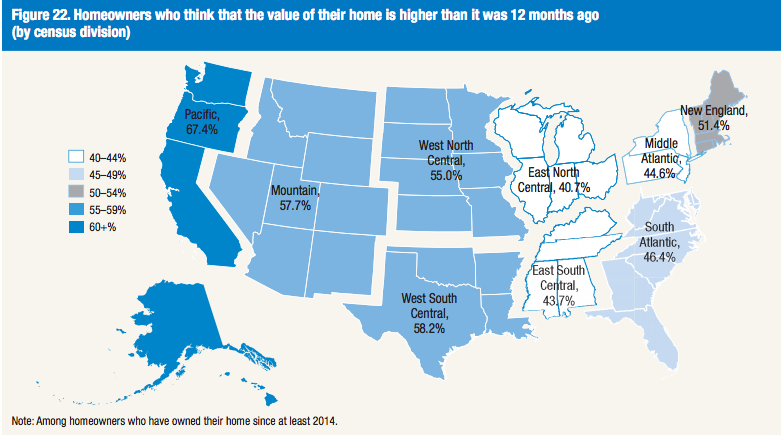
Map: How Trump won against Hillary. The Mortgage bailout by President Obama did nothing to change the bad mortgages people held. In states where housing value increased Hillary won those few. But in states where manufacturing had left and people were stuck with bad mortgages and couldn’t move, Trump was the only one who addressed them. Had Obama or Hillary just mentioned this fact, even if they did nothing about it, I believe Hillary would have won.
I have made the comment several times that the free market is going to be a tough sell today and apparently I am not the only one thinking this way.
No matter what you feel about Trump he clearly touched a nerve talking about the people left with bad mortgages, living in areas manufacturing left facing nothing but service industry jobs.
Yet few realize this:
The Food and Drug Administration estimates that at least 80 percent of the active ingredients found in all of America's medicines come from abroad – primarily China.
"Imagine if China turned off that spigot," said Rosemary Gibson, author of "China RX: The Risks of America's Dependence on China for Medicine." "China's aim is to become the global pharmacy to the world -- it says that. It wants to disrupt, to dominate, and displace American and other Western companies."
Why aren't we worried about China making our drugs?
That's right. We are threatening war with a country that could cut off our pharmaceutical drugs and no one, not Democrats or Republicans, are trying to bring that industry home. Not even an issue. Take heart medications. Suppose China decided to change the formula on many pills and across America people with heart conditions began dying. How many months or even years would it take to discover?
We have played this game in the past. Back when Democrats were making the case for Saddam having Weapons Of Mass Destruction we imposed sanctions on children's medicine. That's right, we targeted children over weapons that weren't there. This from 60 Minutes:
Today that Clinton did this, and that he put Special Forces to look for targets on the ground before he left office, has already been erased from history. All the blame goes to Bush. We are the good guys, and we killed thousands of Iraqi children without any hesitation. You think China would be different?
Not even the drug companies realize the danger they are in as they profit from making drugs cheaply, they can sell for enormous amounts here. The fact that so many of our drugs are much cheaper in Canada shows we are being hammered. So, is that a free market, or a self-destruction market?
These are questions libertarians, free marketeers and conservatives must eventually answer. And the first rumblings of a change are coming from The Heritage Foundation. The Heritage Foundation had a major impact on the Reagan administration and many of its free-market beliefs impacted that administration.
But NAFTA and its impact has begun changing how the Foundation views the free market.
Conservative intellectuals, commentators, and politicians are rethinking the relationship between free enterprise and the common good. While critiques of the market have a long history in traditionalist circles, most American conservatives have held for several decades that protecting markets from government was essential for human flourishing. But that consensus is quickly changing as many elements of classical liberalism are now being challenged. The question is not whether to jettison free enterprise in favor of the common good, but rather how to orient free enterprise in support of the common good. This requires properly understanding the common good and how free enterprise affects it. Conservatives must learn to treat hard-nosed economics and humane political economy as complements, not substitutes.
KEY TAKEAWAYS
Cultivating healthy families, energetic civic institutions, and popular government requires defining the proper spheres of markets and politics. Advocates and opponents of industrial policy often talk past each other, failing to grasp the substantive arguments of their opponents. The question is not whether to jettison free enterprise in favor of the common good, but rather how to orient free enterprise in support of the common good.
A New Definition Of Free Market
This is a seismic change in the definition of free market. Let the debate begin.
Be seeing you. Subscribe now, it’s free and informative.